
Junk Journals 101: Tips, Tricks, and Creative Possibilities
Welcome to Retro Susie Studio! Here, we explore the fascinating world of junk journals, a creative and unique way of repurposing vintage ephemera to create beautiful handmade books. In this article, we will dive deeper into junk journaling and share some tips, tricks, and creative possibilities to inspire your own journaling journey.
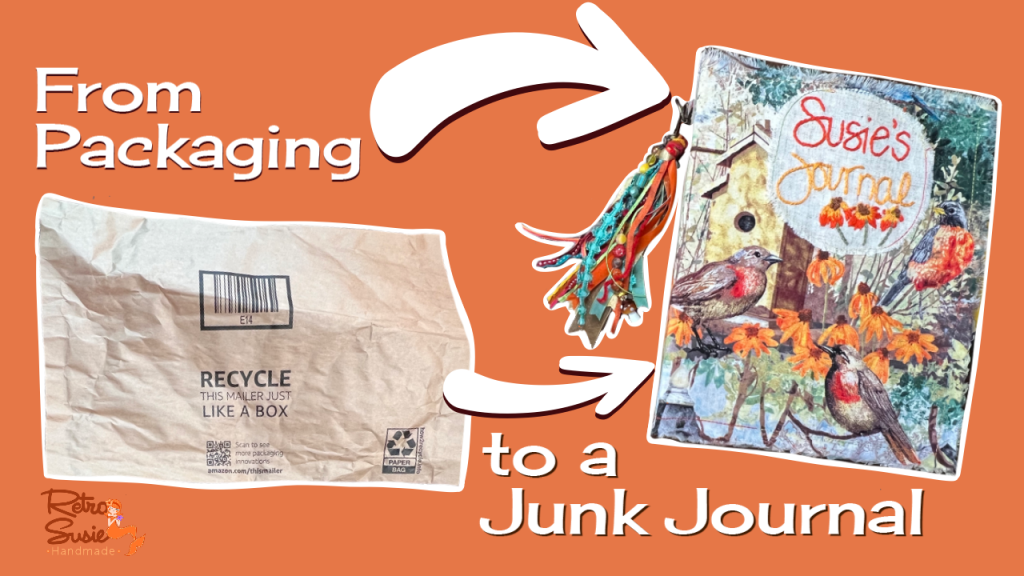
The idea behind a junk journal is to breathe new life into forgotten items by repurposing them in a unique way. The beauty of creating a junk journal is that it allows you to express your creativity while making something entirely personal and one-of-a-kind. If you want a more detailed guide to creating a junk journal, you can check out my YouTube channel, RetroSusie, where I have a step-by-step tutorial on how to make a junk journal cover using Amazon packaging and create and sew in signatures. However, in this article, we’ll cover the basics of making a junk journal.
What is a Junk Journal?
Junk journals are unique and personal to the creator, making them a great way to express creativity and individuality. They can also serve as a form of therapy, providing a way to unwind and de-stress through the creative process. Junk journals can also be used as a means of preserving memories, with many people using them as a type of scrapbook to document their lives or special events. Essentially, a junk journal is a handmade book filled with all kinds of ephemera, such as junk mail, old photos, postcards, book pages, and more. It’s a way to repurpose and give new life to items that might otherwise be forgotten. The great thing about a junk journal is that the possibilities are endless and only subject to your imagination.
Tips for Making Your Own Junk Journal
- Gather Your Supplies
The first thing you’ll need to do is gather your supplies for the cover and the signatures. To create the cover, you can start with a grocery bag, Amazon packaging, or a cereal box, to name a few. Cut the packaging or box down to the size you want, including space for the spine, then add fabric, paint, or paper to the cover.
To create the signatures, you can include things like scrapbook paper, book pages, maps, ledger paper, paper bags, and painted papers. A common size for junk journal signatures is 8.5″ x 11″, folded in half to create a signature with four pages, where the individual pages are 5.5″ x 8.5″. If you are creating signatures of this size, then you would want your cover to be a little bigger, maybe about 6″ x 9″.
- Sew in the Signatures
After cutting down the papers to 8.5″ x 11″, fold each sheet in half to create the pages. Nest your folded sheets of paper together to create your signatures. Align the edges of the signatures as evenly as possible. Use a needle and thread to sew through the fold of your signatures and attach them to the spine of the junk journal. I typically use a 5-hole pamphlet stitch to sew my signatures together.
- Get Creative
After you have completed the cover and sewn in the signatures, it’s time to get creative. Spend some time collecting the little bits of ephemera of your everyday life. That may be receipts, clothing tags, candy wrappers, envelopes, labels, and any kind of packaging. They may not seem very interesting now, but in years to come, they are a reminder of the times and a snapshot of how things were. It’s just a bit of nostalgia that gets more and more interesting and precious as time goes on.
4. Include Photos and Artwork
Be sure to include photos of your everyday life. If you draw or paint, you can add elements of art journaling to your junk journal too! Don’t worry about making everything perfect – the beauty of a junk journal is in its imperfections. Start by cutting and gluing ephemera and photos onto your pages, then add some decorative touches like stickers or washi tape.
Creative Possibilities of Junk Journaling
Junk journaling offers limitless creative possibilities, allowing you to incorporate many different crafting techniques, like stamping, sewing, or painting. You can also include other crafts you love in your junk journals, such as embroidery and crochet. Don’t be afraid to experiment and try new things!
Inspiration and Resources
If you’re looking for more inspiration, there are plenty of resources available online. YouTube is a great place to find tutorials and process videos, and Instagram is filled with gorgeous examples of junk journals